Showing posts with label Vertical Farming. Show all posts

Tuesday, 8 June 2021

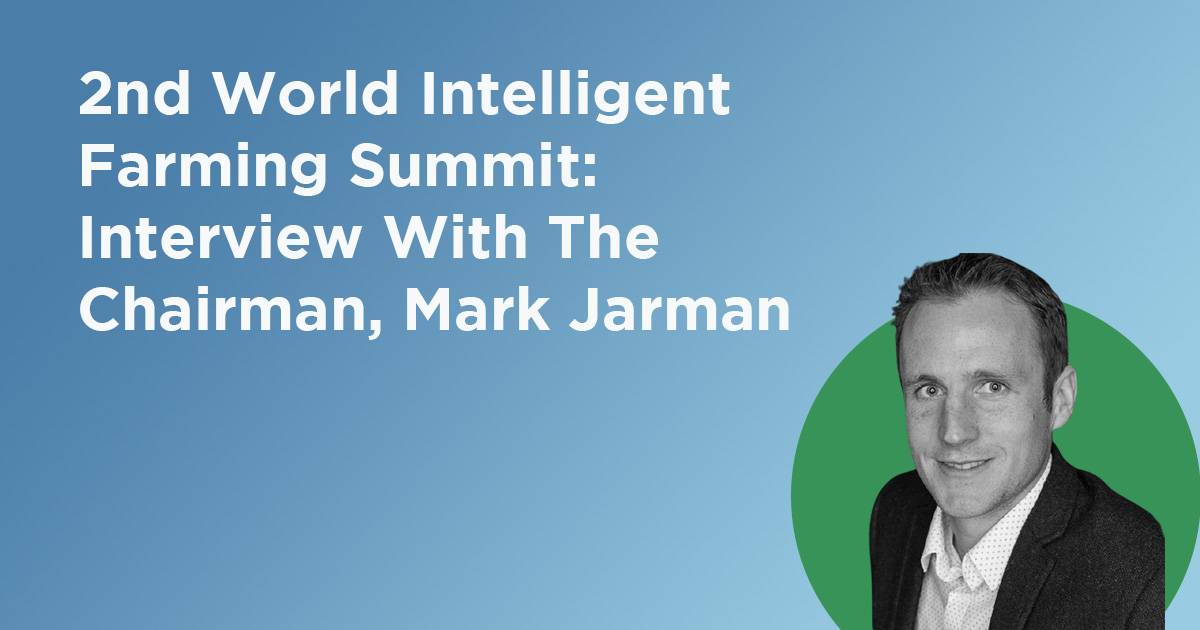
2nd World Intelligent Farming Summit: Interview With The Chairman, Mark Jarman


Before the 2nd World Intelligent Farming Summit, we had the opportunity to interview the chairman, Mark Jarman. Mark is the Head of Agriculture for Satellite Applications Catapult.

In our interview, Mark shares his experience in the industry as well as what he expects from the summit. Let's see what he has to say:

CAN YOU TELL US ABOUT SATELLITE APPLICATIONS CATAPULT AND THEIR VISION FOR THE INDUSTRY?

The UK Catapults are part of a world-leading network of technology and innovation centres that bridges the gap between business, academia, research, and government. Funded by the UK Government and leveraging our neutral trusted entity status, we aim to transform the UK’s ability to create new products and services and open global opportunities to generate sustained economic growth.

As an independent, not-for-profit organisation, the Satellite Applications Catapult delivers impact across the UK economy, enabling businesses to thrive in global markets. The Catapult is instrumental in developing, promoting, and driving the adoption of satellite-based products and services across value chains and markets. Our mission is ‘to innovate for a better world, empowered by satellites.

Located near Oxford in the UK, the Catapult operates globally to deliver solutions that bring together local and UK entities from policy, technology, and science to tackle critical challenges. By connecting industry and academia, embracing a pioneering, agile, collaborative, and entrepreneurial spirit, we get new research off the ground and into the market more quickly to deliver game-changing results.

Our Agriculture and Food Strategy is committed to helping ensure a globally resilient and just food system supported through UK satellite-enabled products and services. Leveraging our network of over 4,500 UK organisations, we develop innovative and transformative sectorial supply chain projects across the world successfully dealing with the nuances that exist in different cultures and business environments.

WHAT ARE SOME OF THE LATEST SMART FARMING TRENDS YOU ARE EXCITED ABOUT?

I am very fortunate in my role to engage with companies and Governments looking to translate some of the latest technology and innovations into an addressment of the breadth of challenges that exist across our global agriculture and food system. The drive for responsible solutions with social and environmental focuses is certainly exciting to watch and especially how these ensure profitable returns to users across. From a technology perspective, areas I am personally excited about the following trends given the will be part of the solution in helping us innovate our way out of some of the big global challenges that agriculture faces, such as available skilled labour or food and resource waste:

  • 5G connectivity, IoT, edge-based analytics, and increased automation on farms
  • Hybrid communications between space and territorial communications to ensure rural farming populations are connected leading to social gains, as well as unlocking technology and data potential.
  • Advancements in imaging such as hyperspectral and analytical capabilities to turn insights from reactive to proactive actionable intelligence.
  • New business models around ‘software-as-a-service’ and ‘data-as-a-service’ that are creating new opportunities for end-users to integrate or exploit the variety of datasets available.   


WHAT BARRIERS DO YOU SEE IN USING NEW TECHNOLOGY MORE BROADLY?

I spend a lot of my time supporting product and service providers to understand the needs of users across the agriculture and food system, and subsequently helping those users understand the technology, removing prejudices, and how it can enhance business decisions and therefore unlock value. Helping bridge this divide is essential to ensure technology can be developed or exploited appropriately. I see some of the core challenges as follows:

  • Value – There is often a failure of providers to clearly justify the value creation of their products or services to end-users.
  • Risk – No growing season is the same and many end-users have historically been let down by technology and data promises. Also, technology adoption often requires a leap of faith to truly understand its benefit. Only very large organisations or Governments can afford to take this risk. Failure to build risk-sharing into business models can put end-users off purchasing.
  • Scale – Users want information at the scale of relevance to them. Products and services need to be either flexible, or highly focused dependent upon user need.
  • Policy – Enabling policies are essential to unlocking technology potential.
  • Social – Farming is a vocation that users enjoy doing. Technology needs to enhance in many cases, not always replace.


DURING LAST YEAR’S EDITION, YOU DISCUSSED THE CHALLENGES AND OPPORTUNITIES WITH SPACE AND AGRICULTURE. COULD YOU BRIEFLY HIGHLIGHT WHAT THE FUTURE DEVELOPMENTS LOOK LIKE AND HOW THEY WILL BENEFIT THE SECTOR?

The satellite sector is undergoing transformational changes, leading to a greater amount of accessible data, higher spatial resolutions, automated analytics, and diversified business models. The Catapult is at the forefront of this revolution, pushing the bounds of both technology and applications.

One of the biggest changes is related to satellite connectivity. The new LEO (Low Earth Orbit - ~1200 km) and vLEO (very Low Earth Orbit - ~550 km) constellations deployed by OneWeb and Starlink respectively will provide connectivity to users and enterprises of multiple verticals. Both constellations will provide high-throughput connectivity to rural or remote areas, where there is no fibre optics or cellular network deployments. Also, in the case of OneWeb, they plan to provide positioning, navigation, and timing (PNT) capabilities to their second generation of satellites (in service in 2024-2025). That PNT service will compete with Galileo or GPS and will create new business opportunities related to positioning.

Apart from these broadband services providers, there are other LEO constellations with a focus on IoT that could be of interest for rural areas, farming, etc. They will provide connectivity to sensors (LoRaWAN, NB-IoT) from the field directly to the satellite and therefore help us move towards truly connected farms. 

WHAT ARE YOUR EXPECTATIONS FOR THE 2ND WORLD INTELLIGENT FARMING SUMMIT?

Often at events with a technology-driven focus, there tends to be a speaker line-up from technology and service providers. I am most excited to be chairing this event because of the line-up of end-user speakers that are joining from across the breadth of the agricultural and food system. Getting their perspectives is essential as those insights can help guide and ensure commercial success for those in the audience looking to supply them with technology and data-driven solutions.


To learn more about the 2nd World Intelligent Farming Summitrequest your free brochure! Then save your seat today to virtually join Mark and other industry experts.

Wednesday, 12 May 2021

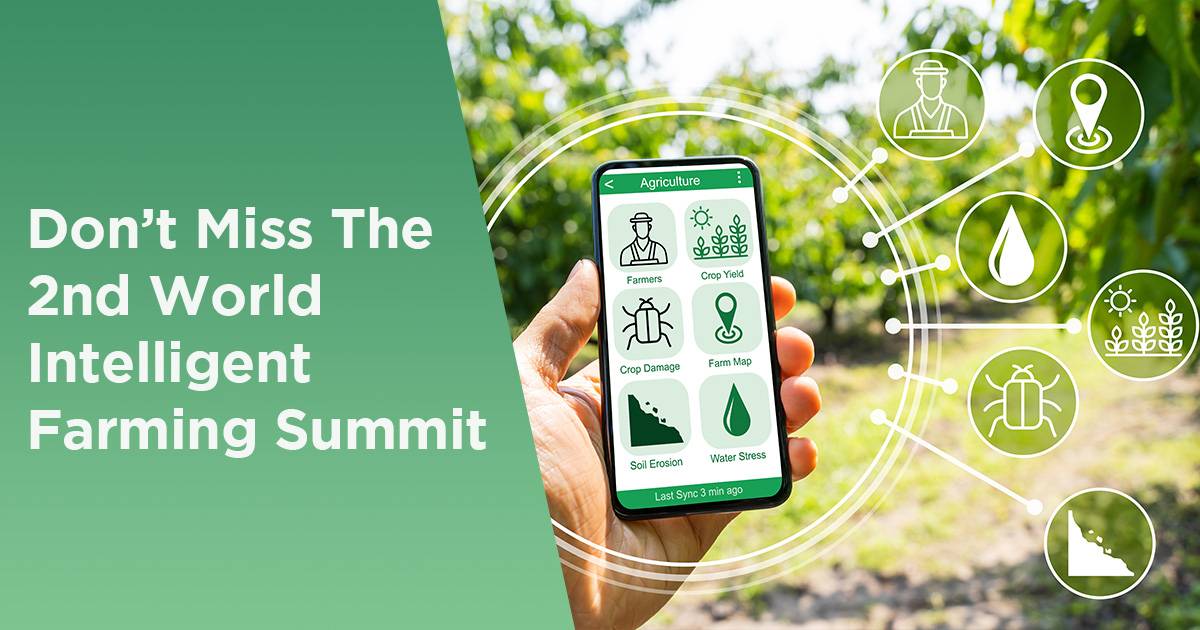
Don’t Miss the 2nd World Intelligent Farming Summit


The farming sector is currently experiencing a digital transformation with recent technological innovations empowering agriculture teams’ to work more accurately and efficiently by accessing real-time data which allows for more informed decision making, leading to higher productivity and reduced operational costs.

It is undeniable that a range of new technologies can improve efficiency and significantly affect business models in the agriculture sector. However, despite all the benefits that digital technologies are bringing, there are several new challenges that farmers, policymakers and solution providers are facing. Sharing experience with industry professionals can help to open up new, disruptive opportunities shaping the future of farming.

The upcoming 2nd World Intelligent Farming Summit will take place on June 17-18, 2021 and will bring together senior-level executives and agribusiness professionals to discuss the current transformation, winning business models, evolving trends and successful implementation of emerging technologies in the farming industry.

This year’s hybrid edition will explore the wide implementation of data analytics, AI, Farming 4.0, as well as, the use of sensors, drones, autonomous vehicles, telematics, satellites & other technological advances moving towards modern, sustainable farming.

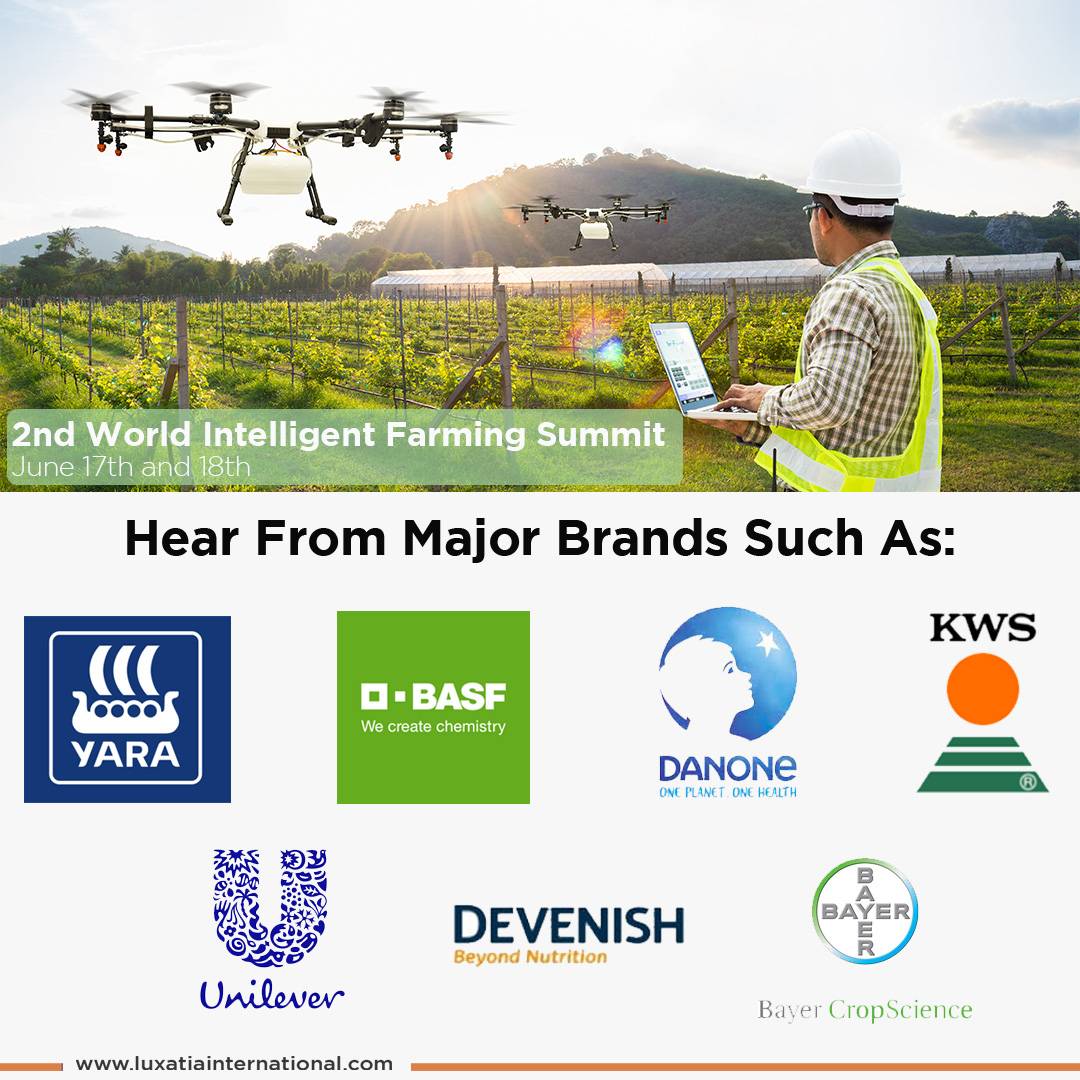
We will have the pleasure of hearing from top expert speakers from major brands such as Yara International, BASF, Danone, KWS, Unilever, Devenish, Bayer Crop Science and other key players in the market about their experiences for strategies and solutions to achieve a high-performance agricultural production.

The first day of the event will include keynote sessions on sowing the seeds for the digital future of farming, overcoming the challenges from new technology towards actual implementation and enabling new business models to improve agricultural sector performance.

On the second day, the discussion will revolve around implementing data-driven solutions to boost productivity and efficiency in the farming sector while moving towards a more sustainable future.

This hybrid edition gives you the flexibility to join us in Berlin or to connect virtually from anywhere. By joining, you can establish valuable business relationships and receive real-time feedback to the challenges you’re currently facing. 

Our event platform offers all attendees, whether it’s in-person or virtually, a range of networking and contact-building opportunities starting 3 weeks prior to the event. The platform will also be accessible after the summit so you can keep in touch with your colleagues and form lasting connections.

Don’t miss this fantastic two-day opportunity to gain exceptional knowledge from like-minded peers about the latest trends in agribusiness. We can’t wait to see you in Berlin or online through our event application!

Request your free brochure to see the full speaker lineup and then register today to reserve your spot.

Wednesday, 29 April 2020

Join Us During The World Intelligent Farming Webinar


There isn’t an industry left unaffected by COVID-19 but the farming and agriculture sector have been hit unexpectedly hard as supply chains were shut down and markets had to find sources closer to home for produce, meat and more.
We would like to do our part to continue the push for more sustainable farming practices through improved methods and new innovations by offering a free webinar during this time of self-isolation. Just because we can’t meet in person does not mean these important conversations have to stop.
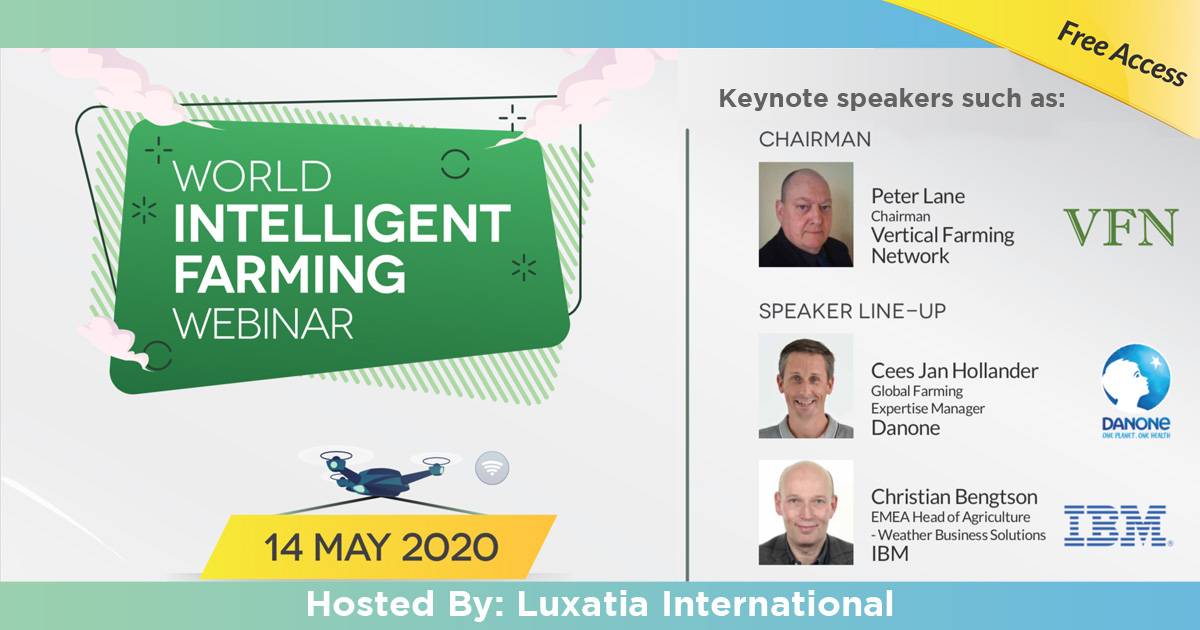
Join us on May 14th as we discuss the future of farming and agriculture technology transforming the market.


Peter Lane, Chairman of Vertical Farming Network, will be chairing our event and discussing the realities of vertical farming.
We will also be joined by Cees Jan Hollander, Global Farming Expertise Manager with Danone, and Christian Bengtson, EMEA Head of Agriculture - Weather Business Solutions with IBM.
Two other keynote speakers will be joining us as well. Register to learn more!
Don’t miss this two-day opportunity to connect with agriculture experts and contribute to the conversations shaping the future of farming.

Register for this free webinar here, bit.ly/Intelligent-Farming-Webinar


These speakers will be returning and will be joined by several other industry experts during the in-person summit scheduled for September 3rd & 4th. That summit will continue the discussion around technological advancements and real-world applications of smart sensors, precision agriculture, vertical farming and robotic applications in agriculture.
Request your free brochure to see the full speaker lineup and then register today!

Thursday, 12 December 2019

How Technology Is Shaping The Future Of Farming


We use technology in almost every aspect of our lives. It helps us accomplish tasks at work and home, stay up to date with current events and provides countless hours of entertainment.
From a business perspective, technology is helping across all industries as well. It aids in production, customer service, talent acquisition, security and much more but what impact is it having on the planet?
Some might argue outdated devices are contributing to the ever-growing pollution problem or that our data is at risk by using these technologies and while that may be true, several innovations are aiding in land and water sustainability.
According to FAO, the world population is expected to grow by over a third between 2009 and 2050. We are in the midst of this growth so we must continue to adopt more efficient and sustainable production methods while also adapting to climate change. Many farmers are utilising technology to help achieve those goals, reduce water consumption, improve operations and increase profits.
Author’s Note: Sonnet Malakaran George, Agro-Food Industries and Losses Expert from FAO (Food & Agriculture Organization) will be one of the keynote speakers sharing his valuable insights during the World Intelligent Farming Summit.


Here are a few of the tools & strategies helping farmers to achieve these goals and more:

Mobile Technology

The first tool we will look at is mobile technology since it has been around the longest. Tasks or data that farmers would traditionally use a pencil and paper for have been transferred to mobile devices and tablets.
Smartphone technology and applications have provided many benefits to farmers without costing them a lot of money. These software solutions provide real-time feedback and let you send out new work assignments to your team, all from the field.
One example of this is the Field Navigator app, a popular driving application for Precision Agriculture. It allows you to measure the size of your farm easily, even in poor conditions or low visibility.
It also has a steering assistance feature that helps with driving to parallel tracks, reducing your workload as well as the size of untreated areas and avoids overlapping. The app works for any size farm and is compatible with external GPS antennas for even further accuracy.


Image Source: Play Store

Big Data Analytics

Like many other industries, farmers can use big data to increase productivity and profitability. For farmers, big data can provide rainfall patterns, water cycles, fertilizer requirements and much more.
By having this information, farmers can make smarter decisions that will ultimately increase the farm’s yield. There is a lot of information to analyze with the data collected by mobile devices and wireless technologies but farmers need to be able to gather it all into one platform.
That is where our next tool comes in.

Farm Management Software

Farm management software can collect huge amounts of data and help farmers better manage it to make informed decisions at every stage of the production process. There are also other software options to help with machine operations and production.
Agrivi is one example of a farm management software that lets you plan, monitor and analyze all of your farming activities easily. You can also manage tillage, planting, spraying, fertilization, irrigation, harvesting and all other activities with a few clicks.


Image Source: Agrivi
Boost your performance with a farm management software by gathering and storing substantial information. Make timely and informed decisions based on accurate data.

Agriculture Drones

Agriculture drones are one of the latest innovations transforming the farming industry and its popularity is only increasing. The agriculture drone market is predicted to be worth $5.19 billion USD by 2025.
Drones help farmers in many of the same ways the other technologies mentioned do, with increasing crop yield, saving time, reducing expenses and providing data to enable accurate and precise decisions making.
Here are a few ways drones can be used for agriculture:
  • Estimating Soil Conditions
Many of these tasks required the farmer to be in the field, performing them manually before but now, through drone technology, farmers do not have to be in the field and these tasks are completed faster with more accuracy.
Even top brands are recognising the importance of drone use in agriculture. Recently John Deere collaborated with Volocopter to create a VoloDrone-based aerial crop-dusting system. The drone is mounted with a tank and sprayers to dispense pesticides, liquid fertilizer, anti-frost agents and more. Both companies see potential for sowing seeds for new crops in the air as well.


Image Source: TechCrunch
To discover even more ways technology is shaping the future of farming, read our full blog post here.
Join us and industry experts to learn more about these technologies and trending topics in smart farming. Register today to save your seat for the World Intelligent Farming Summit in March.